
Featured

Sander Saarmets

Sander Saarmets, an Estonian composer and electronic musician, sat down with Ģirts Ozoliņš, founder of Erica Synths, for an in-depth conversation about music-making beyond fixed forms. Their discussion moves through Saarmets’ early encounters with electronic music, his work with film, contemporary ensembles and modular systems, and his ongoing interest in improvisation, graphic notation, embodied performance, and the meeting point between acoustic and electronic sound. Along the way, they touch on listening, risk, context, and the value of approaching instruments, genres, and venues “the wrong way.”

-How did your musical journey begin?

Sander: If I go back to the very beginning, then my first interaction with music was through violin. I studied violin. But the first things I remember are probably listening to music - or my father listening to music at home. And I remember some things I really liked, and some I didn’t like at all. One of the things I really liked was Pink Floyd. I grew up with that, it was my favorite kind of music.

I was about nine or ten years old when I actually saw Pink Floyd in concert. This was in Sweden - they were doing their last tour, Division Bell. And this was a life-changing moment for me. They also had quadraphonic sound, and before they started doing the actual songs, there was an intro with all kinds of abstract sounds - helicopters swirling around, lasers, lights. To me, this was just amazing. And every big concert after that was a disappointment.
-I had a similar experience. I went to Manchester for The Wall show. And after that I realized every video projection I saw… you know, the video artist has to see that show and then reconsider his life choices and retire immediately.

Sander: To me, the coolest part of that concert was the middle parts - not the songs themselves, but everything in between: transitions that were more abstract. Later on I read about their early days, how they grew up improvising and playing in small clubs, and I guess some of it stuck with me. So I was studying violin, but that was a completely different world.

Then I finished violin in my teens, and I didn’t continue with it - I chose art instead. I was considering going to the Art Academy.

But parallel to violin, we got our first PC. And for some reason my father also bought a sound card and a small MIDI keyboard. The first software that came with it was MIDIsoft - a MIDI sequencing program where you could insert notes. It was note-based; not really a DAW, more something between, like Sibelius/Finale and a DAW.

I wrote my first pieces there. There was a composition competition at the music school, and I wrote a piece for piano that was almost impossible to play, but there was one teacher who could perform it. And I heard it live for the first time at the competition, and it was quite cool.

-But what was your motivation behind making a piece? Did you try composing before? There has to be some urge to say: “I’ll do it.”

Sander: I think I just wanted to make music. But this was before the time of simple software like Fruity Loops or Reason. That must have been around ’95. Cubase and Cakewalk were the main programs back then. While I was studying violin, composing wasn’t taught at school - it was solfège and harmony and music history, but never composing. And to me these two worlds were kind of apart: playing violin, and wanting to make music.

So whenever I got my hands on proper music software, I just wanted to explore it and see what it could do. Later there was Fruity Loops, then Reason, then Cubase, then Logic, and Ableton Live.

-I’m curious - how did you end up composing for piano, not making techno, for instance?

Sander: In that software I was fascinated by drums too, but it was just the sound card sounds - there were no VSTs. I did make some beats with it. But for the competition it had to be for one instrument. So I wrote a piece for piano.

- If you reflect back from today’s perspective, how do you feel about the piece you wrote?

Sander: I don’t remember any of it. There’s no recording. But I remember it was quite fast and challenging to play. I wouldn’t say Black MIDI, but… much more intense than a default piano tune.

Then I finished with violin, and in Tallinn during that time I got acquainted with the underground scene when I was around 18, and got invited to my first gigs. Back then I didn’t have any synthesizers, so the only way to perform was to bring my computer, not a laptop, I didn’t have one yet, and I played violin on top of whatever was running from my computer. So I still took what I knew - violin - on stage, and just improvised.

My first musical moniker was Muschraum. I released an album a few years later, in 2005, on the Ulmeplaadid label. That album was quite well received. And the funny thing is: I still used violin, but not recorded violin - synthesized violin on that album.

-This is quite opposite to… I interviewed Yann Tiersen and he said he tried using samples of acoustic instruments and loved sampling and manipulating sounds, but at a certain point he asked himself: “I can play violin - why would I torture myself?” So he just played violin.

Sander: I had a sampling phase too, but I never got comfortable with sampling. I built some patches of my own sounds in Kontakt, but somehow I never felt right with it. I prefer playing and synthesizing sounds.

And yeah, if you can play an acoustic instrument, and you have it, then you should play it. Of course you can do crazy glitchy things with samples, which is interesting, but I always leaned more towards synthesized sounds.

-Were you a professional musician - like, did you make money?

Sander: I got paid for gigs, yeah. Not a lot, but something. A few years after that I got a commission for my first film soundtrack and that was thanks to the first album. It was heavily played on one radio program that interviewed all kinds of people, culture, scientists and they liked to use it as background music.

And the director of a documentary really liked the album. He contacted me to ask if he could use some tracks from it for the film. And I thought: okay, let’s write something new for this. So I did. It was a really good collaboration.

The film is called “Uus Maailm” (“The New World”). It’s about a grassroots movement - guys who wanted to make their environment more open and friendly, and they started organizing events and parades and festivals.

Some years later, we did another film together. Since then I’ve been loosely involved in the film world, and I’ve actually learned a lot from cinema. During and after high school I got deeply into film - arthouse cinema in particular, from Europe to Asia. At one point I was very interested in Thai New Wave cinema.

There was one director, Pen-Ek Ratanaruang, who focused very strongly on sound. He never used music in a traditional sense, but instead built sonic environments that almost became music. That approach influenced me a lot. It showed me that music can be anything, if you give it enough attention. Film also teaches you how to deal with time: how to build events, how to break linearity, how to focus on the movement of time itself.

-What is your process when composing for film? At what stage do you usually come in?

Sander: Most often the composer comes in at the very last stage, when the timeline is more or less locked, and you start adding layers. But ideally, I’d like to be involved much earlier - to see parts of the filming process, maybe even gather sounds on set. That gives you time to really inhabit the world of the film.

Usually you enter very late, with strict deadlines. If you’re lucky, you have a month; often it’s just a few weeks. There’s a lot of back-and-forth with the director and editor, and I’d say around 70% of what you propose never makes it into the film. That’s humbling, but also good, because what remains becomes much more meaningful.

-Ideally you’d even like to see the script?

Sander: Ideally, yes - though that might be too much for everyone else. But I have been involved in late editing stages, and that’s very educational too. You see how simple cuts change tempo and flow, and that also feeds back into how you compose - thinking in rough cuts, smooth transitions, pacing.

Later, when I was living in Taiwan, I met an Austrian director who was also based there, and we started working together. Her name is Ella Raidel. She also prefers not to use music in film, focusing instead on sonic environments. We were both inspired by a Chinese director, Jia Zhang-ke, who works heavily with sound and almost never uses music in his film. If there is music, it carries a symbolic meaning.

We had a shared reference point: building something close to musique concrète - constructing almost musical structures out of construction sites, people, random sounds that aren’t really random but carefully composed. Sometimes we tried to sneak in more overt music and see if it would stick. Occasionally, it did.

-And then you ended up at the Academy of Music.

Sander: Yes, after high school I wasn’t sure whether to go to the Art Academy or the Music Academy, so I waited a few years. I kept performing as Muschraum and felt quite lost musically after the first album - I didn’t know where to go next.

Eventually I entered the Music Academy, and I’m really glad I did. There was this fear - often reinforced by friends in electronic music - that going to an academy will ruin you, that you’ll start writing music “the right way.” My experience was the opposite. The more you know, the more you can break from tradition. It’s good to understand how music has been written, how it can be written, and then slowly find your own way.

I studied electroacoustic composition at bachelor level. It felt like a logical continuation of my electronic work, but at some point I became completely oversaturated with electronics and wanted to write only acoustic music.

-Who were your musical influences at that time?

Sander: One of the strongest influences was Autechre, Aphex Twin. But even earlier, György Ligeti was incredibly important. When I first heard Atmosphères in a music history class, it completely changed my perception - I was amazed that classical music could sound like that. Later I heard it in a concert hall and had the same reaction.

A similar thing happened when I first heard Autechre. Warp Records initially felt foreign to me, I wasn’t sure if this was “right” music, but eventually I got deeply into it.

Before that, though, there was Ryuichi Sakamoto. I grew up with his music because my father traveled to Japan in 1990, just before Estonian independence was re-established, which was a rare opportunity at the time. He brought back Yellow Magic Orchestra and Sakamoto records, and we listened to them a lot. Strangely, I didn’t initially connect that music to later electronic artists like Autechre.

-During your studies, were you composing for acoustic instruments?

Sander: Yes and no. It turned out I couldn’t graduate with only acoustic music, so my final work was for violin and electronics. That was also the first time I used graphic notation. I saw scores by Iannis Xenakis and realized music could be written visually, descriptively, not just through notes.

That opened a whole new way of thinking. Later I explored text-based notation, abstract visuals - treating almost anything as instructions for music.

-If your music, that’s based on graphic notation is performed, should the composer explain graphic notation to performers?

Sander: It depends on intention. Sometimes you want to be very precise - with legends, timelines, clear instructions, even Max patches. Other times it’s interesting to treat it like a lost artifact, something you don’t fully understand. Like computer games with no tutorials. Figuring it out becomes part of the experience. Both approaches are valid.

After graduating, I went to Taiwan. My initial plan was to continue studying, but the department I wanted closed, so I stayed without studying formally. I met Ella Raidel there, and we started working together, and still do. Being in a completely different environment taught me a lot about myself and my musical preferences.

During that time I started a minimal techno–inspired project called V4R1. After almost five years, I released an album from that material.

When I returned to Estonia, I discovered the CoPeCo program - Contemporary Performance and Composition - a joint program between universities in Tallinn, Stockholm, Lyon, and Hamburg. You spend half a year in each place. It involved a lot of improvisation, workshops, and performing in very different contexts.

That program shaped me strongly as a performer - finding freedom in improvisation, not being bound to fixed pieces or backtracks, but working with a few sequences and mutating them in the moment.

This was also when I strongly adopted the idea - inspired by Don Buchla - that synthesizers shouldn’t imitate existing instruments. A keyboard pushes you toward safe chords or passages. Without it, you’re forced to think differently. You can get lost, but that’s part of the point.

-How did your performance setup evolve?

Sander: For a long time I performed without synthesizers - just laptop, MIDI controllers, Max patches, amplified objects, feedback. I wanted electronic performance to be as reactive and immediate as acoustic playing and to have as direct control over it as possible. And at first I struggled with it, because when you have your electronic equipment, it can be quite slow and you always have to think and it’s not as intuitive as with maybe an acoustic instrument. But you can get there and this is what interested me in performing with electronics. I wanted to get faster in my reactions and to be in real time, not to think some steps ahead or just have a sequence running and just walk behind it.

In Stockholm, I spent time with a large Buchla system. I stayed after the studies, booked studio time, and explored it deeply. That was the moment I knew I wanted to get into modular. My first system was an Endorphin.es Shuttle System, inspired by Buchla. I recorded a lot with only using this as an independent system, so at first I was a bit afraid to expand my eurorack system. I remember the first time I got a bigger case and put the existing system in a new housing - it was a bit scary.

-How did you make decisions on filling up the system? What was your rationale behind getting another module?

My approach to modular has always been intuitive. I rarely felt I made wrong choices. I often tried using modules “the wrong way” - like using an LFO as a sequencer. Mutable Instruments Tides was my first sequencer. I enjoy controlled randomness: knowing how far you can push things and still return.

-How do you utilize the LFO as a sequencer?

Sander: At the time I was using the Shuttle System, and I sent control voltages from the LFO to it, mainly to control oscillator pitch, but also some percussive elements. I think I had Basimilus Iteritas Alter in my system for a long time, and I used that for most of the percussion.

What’s interesting is that some LFOs - like Mutable Instruments Tides - have multiple outputs, and in a way that’s similar to something like Erica Synths’ Octasource. You can introduce uncertainty so the LFO is no longer linear. The outputs start to interact in more complex, slightly chaotic ways, and that creates really interesting rhythmic and melodic results.

Later, when I added a quantizer, I could constrain the voltages to a scale, and at that point it effectively became a proper sequencer. With modular, I really enjoy this idea of controlled randomness. You set up a kind of safe space, and then gradually push things to see how far you can go while still being able to come back.

-How do you treat your modular system in general? After a performance, do you keep the patch or remove everything?

Sander: I always remove all the cables. Partly because my case has a very shallow lid - that’s the practical reason - but conceptually too. In the beginning I tried to leave as much patched as possible and close the lid, but now I think of it more like a mandala: you build it, and once it’s finished, you brush it away.

-So every performance is different - both by necessity and by choice?

Sander: Yes, every performance is different. But if the case stays more or less the same, you internalize it quite well. In the early years I tried to document my patches - writing down what was connected to what - but that’s very time-consuming, and rebuilding from notes is often harder than just repatching intuitively.

-I’ve seen Suzanne Ciani preparing for live sets - she also repatches everything.

Sander: Exactly, and it’s actually a really good memory exercise. I enjoy it, even though it takes time. There was one performance in Vienna where we didn’t have electricity for a while, so I just started patching in silence. People were looking at me like, “What are you doing?” But I didn’t need to hear it - I knew my system.

-What was on the table today in terms of gear?

Sander: I had Make Noise Strega and a sequencer 0-CTRL. I used the sequencer almost like a preset system for a single oscillator voice, running through different modulation states.

With Strega, I discovered it’s a really good effects box. It’s simple, but very flexible. I usually send one channel from my main output into Strega, then work with its feedback and the delay. Sometimes I blend that processed signal back into the main output.

-And beyond modular - how did your performance setup evolve?

Sander: Lately I’ve been using expressive MPE controllers like the Linnstrument. I’ve played it together with Hydrasynth, and today I had the chance to play Steampipe. I really need something tactile in performance. That’s why I like these instruments - they’re very sensitive, and you can really shape the sound under your fingers. It’s not as fixed as keys; you can drift between notes.

-We talked about past inspirations. Do you have any listening recommendations today?

Sander: That’s actually a difficult question. I do a monthly radio show, and for that I listen to a lot of new music. I have this constant need to discover things that aren’t widely known yet and give them airtime. There’s so much out there that it’s hard to single something out.

-You also mentioned considering doctoral studies in Vienna. What was the topic?

Sander: I was interested in expanding performance capabilities through gestural control - finding ways to make electronic performance more physical. In one workshop we worked with a Genki Instruments wireless controller, and that was a really eye-opening experience.

Historically, there’s been a disconnect in electronic music: you program something, then you hear the result later. But now things are getting closer to real time. When you translate bodily movement into control signals, electronic music becomes much more embodied. It starts to resemble playing an acoustic instrument that responds to your physical state - even biofeedback - and reacts to how you respond to the sound. That’s what really interests me: using biofeedback not only to perform, but to compose in real time.

-So you’re looking for deeper integration between performer and instrument?

Sander: Yes - and also deeper integration between acoustic instruments and electronics. Often they exist as two separate layers: an acoustic instrument, and electronic processing on top. But they can be much more intertwined. I’m most interested in where those worlds meet and how they enrich each other.

-Acoustic instruments often offer very nuanced control, whereas electronic instruments can be more limited - piano being the extreme example. You have velocity, but that’s basically it.

Sander: Exactly. You can only do so much with pressing a key (which is a lot).

-Are there electronic instruments that come closer to that level of feedback?

Sander: MPE controllers come quite close. I also really like my own instrument setup because you can decide what parameters you want to control. With acoustic instruments, the parameters are fixed by design. With electronic instruments, you can redefine them - the instrument can become anything. Steampipe is a good example. It’s like a chameleon. I also enjoy how it breaks, similar to overblowing a woodwind instrument.

-Yes, the beauty of Steampipe is that it's a physical modeling synthesizer and you alter completely different parameters than on a regular synthesizer, where you have quite obvious and fixed parameters basically to interfere with. Looking ahead - what are you focusing on next?

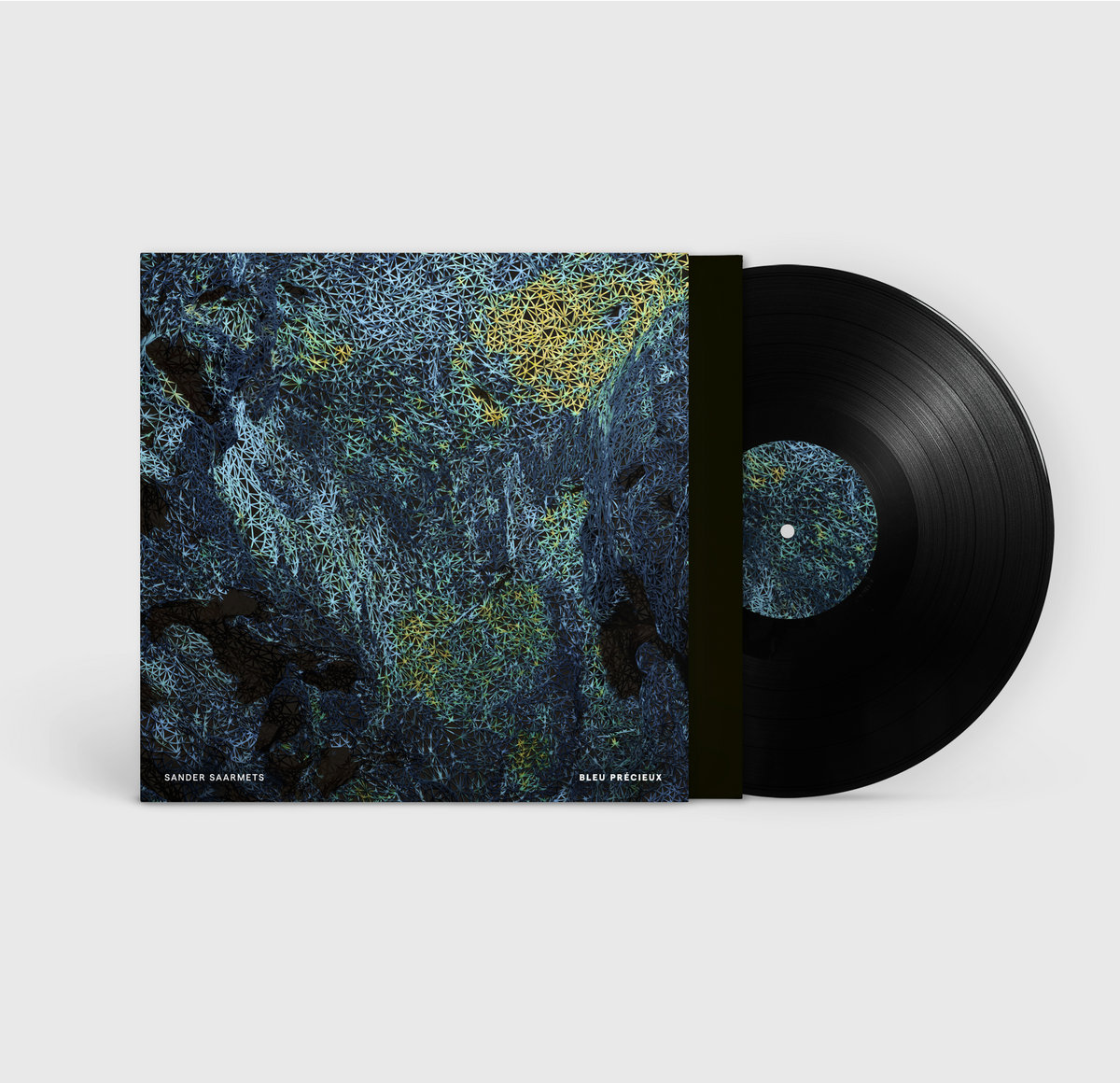
Sander: My latest album is still quite fresh, and I’m still figuring out how to perform it live. It’s a hybrid setup with visuals. I’m planning a little concert tour in Europe this year.

I’m also working on a project with a Belgian woodwind ensemble HaftCraft and modular. This is the first time I’m writing myself into the composition as a performer. Previously, when writing for ensembles, I either used fixed backtracks or patches the ensemble could run themselves. This time I wanted to integrate my own modular system directly into the piece.

-So ensembles interested in contemporary music can commission you?

Sander: Yes, that’s right.

-We usually end the interviews with advice to younger producers.

Sander: The most liberating advice I can give is: don’t get stuck in genres. Think of anything as music. There’s a great exercise where you go outside, record sounds you like, and then try to recreate them without using the recordings - either on acoustic instruments or by building a synthesizer patch. That process of translating something from the outside world into music teaches you a lot.

-And practically - how do you survive as a musician?

Sander: It’s a work in progress. But in the long term, if you find your own voice and stay true to it, you don’t have to take on work you don’t believe in. You just keep building your world, step by step.

-Also through interdisciplinary projects?

Sander: Yes. Working with other disciplines is part of that translation process. You learn a lot about music by seeing it from another perspective.

-I once had a workshop at an Italian music school, basically a dance music production school, and I was also asked to play a small gig there. I played my own treatment of Steve Reich’s Four Organs. The audience was expecting dance music, and nobody got it. Completely nobody.

Sander: Yes, there’s always that expectation. But sometimes surprising the audience is exactly the point. You never know - maybe someone in the room really needed to hear that.

-In another situation I played the same material in a completely unrelated context, and people were blown away. They couldn’t understand how a modular system could play something that clearly wasn’t a one-to-one reproduction of Four Organs, but was still recognisable.

Sander: Exactly. Context changes everything.

You may also like

Mixhell_249.jpg
July 10, 2020 · INTERVIEWS

MIXHELL

Martin-Gore-Col-1-Travis-Shinn.jpg
July 22, 2020 · INTERVIEWS

Martin Gore

HH.jpg
Aug. 18, 2020 · INTERVIEWS

Headless Horseman