Featured

ALEA(s)

Today we talk with Brussels-based audiovisual collective ALEA(s) - musician and synth manufacturer François Gaspard, motion graphic designer Boris Wilmot, and illustrator Pierre Coubeau - about their mix of electronic music, animation and live drawing.

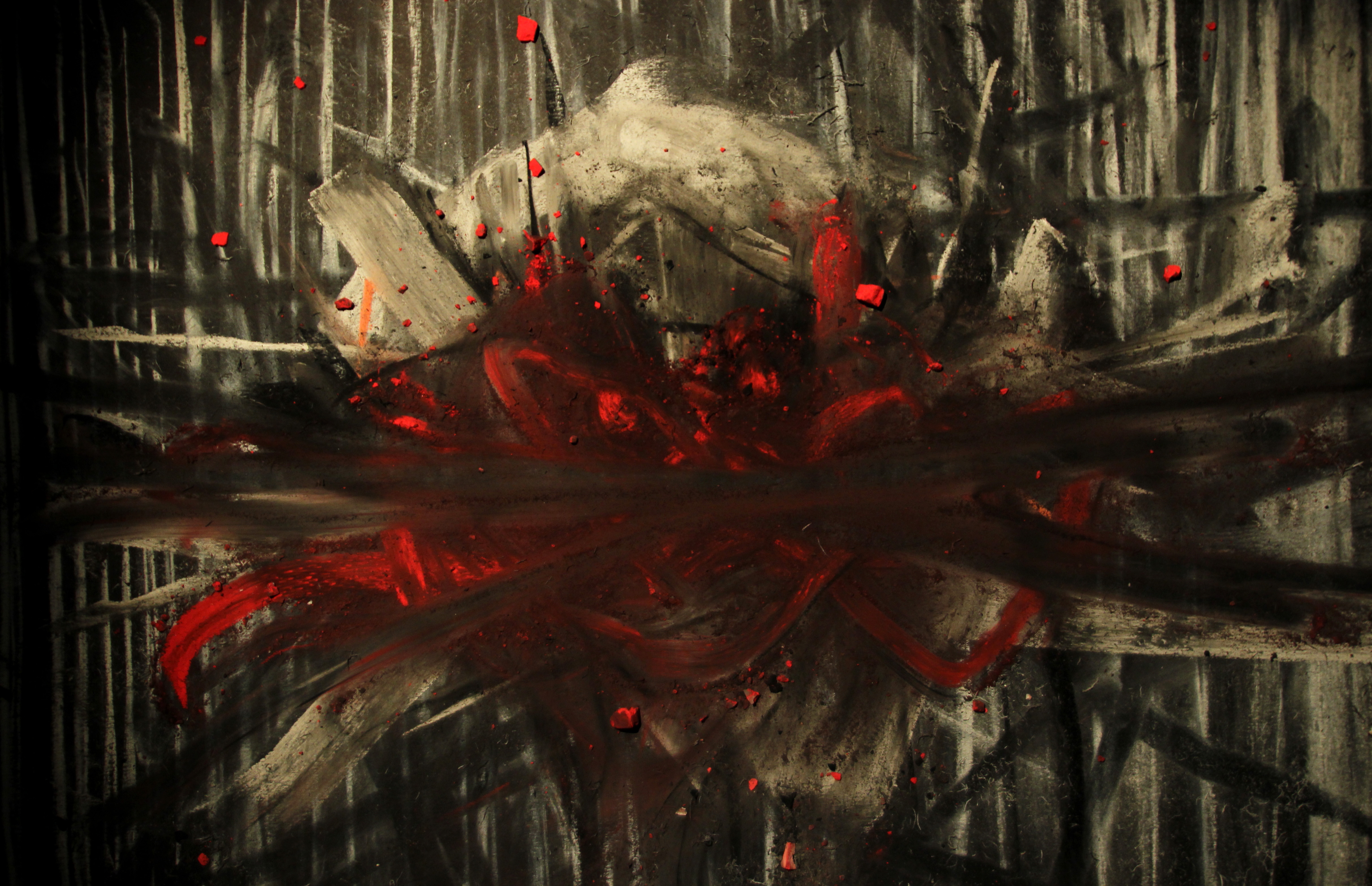
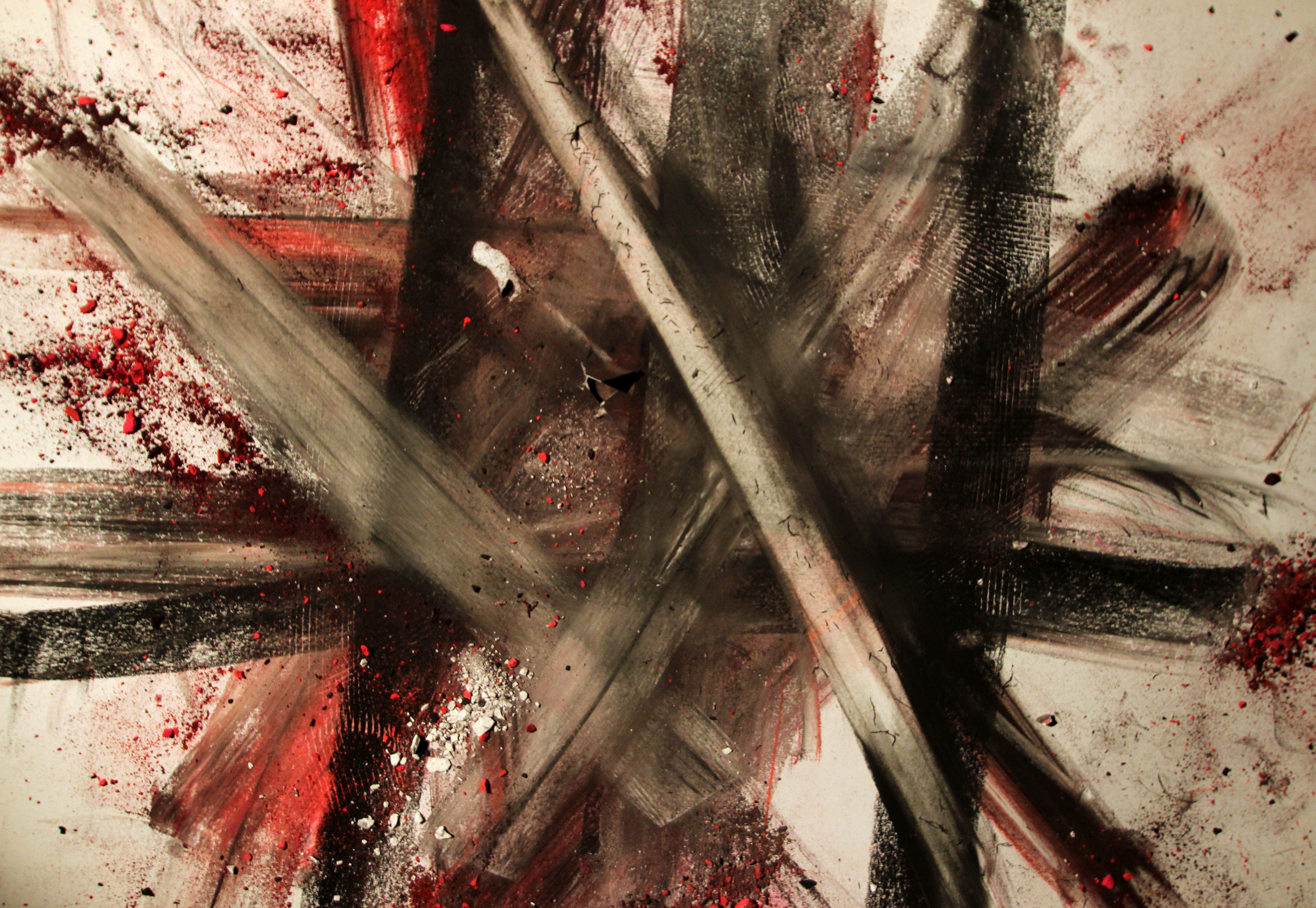
Their performance at the Erica Synths Garage left not only a lasting impression, but some physical evidence too, Pierre works with pastels, and despite plenty of scrubbing afterwards, a few red stains still remain on our floor and table as a reminder of their performance.

-How did the three of you come together and decide that you need to make a project?

François Gaspard: We used to be in a collective involving, like, 15 people, which was called Boya. It ended a bit more than 10 years ago, and everyone was really good friends. Especially Pierre, Boris and me. And when the collective split up, we were like... yeah, we had never collaborated together to do something, and we had this desire to do something together, to go on stage together. And the big question was, okay, we have to mix music and visuals and drawing. How can we do that?

So we started to research how we could manage to have the three of us on stage and create, like, a proper live act with this. It's mainly coming from the fact that we knew each other and we were very excited by what each person was doing on their own. And, yeah, so it started.

-Well, how much of this performance is pre-planned or spontaneous? Do you ever react to your audience and adapt something on the spot?

Boris Wilmot: So, the first show we did, pretty much everything was improvised. Like, Before the show, François would tell us, “Okay, I’m going to play these kinds of sounds,” and then Pierre and I would figure out how we could respond to them visually. So each of us had our own set of tools to work with, and at the last moment we would decide how to combine them. It was very much improvised.

But then, a few years ago, we decided to work on a new show that would be much more structured. The show we’re playing now is carefully planned, so we know exactly what needs to happen and when.

But, of course, because that's the nature of Alea(s) - we do everything live - we still have those kinds of moments that can be a bit floating and, yeah, a bit improvised. But, yeah, I mean, it's really well written, and it's two different things.

Improvising is more fun for us, but we’ve noticed that the audience responds much better now that the show is more structured and tightly put together.

-I see. But there’s still some unpredictability, right? Pierre might draw something slightly different each time, and François’s modular setup will naturally produce variations, so you have to adapt to each other as you go?

François Gaspard: Yeah. Actually, rather than saying it’s completely planned, I would say we have very clear cue points. There are certain moments in the show where we all know exactly what needs to happen and where we need to meet. Because all the different mediums we’re working with naturally involve improvisation, things can go in different directions between those points. But after a certain amount of time, we all have to arrive at the same cue again.

So the basic story is written, but what happens between those fixed points is more improvised. We have a structure, but we can never plan it 100%.

-A lot of our readers are musicians and gear people themselves, so I have to ask about the technical side of the performance as well. Could you walk me through the whole process? From the audience’s perspective, we see Pierre drawing something, then suddenly it appears on the screen and starts moving with the music. What exactly is happening behind the scenes to make that work?

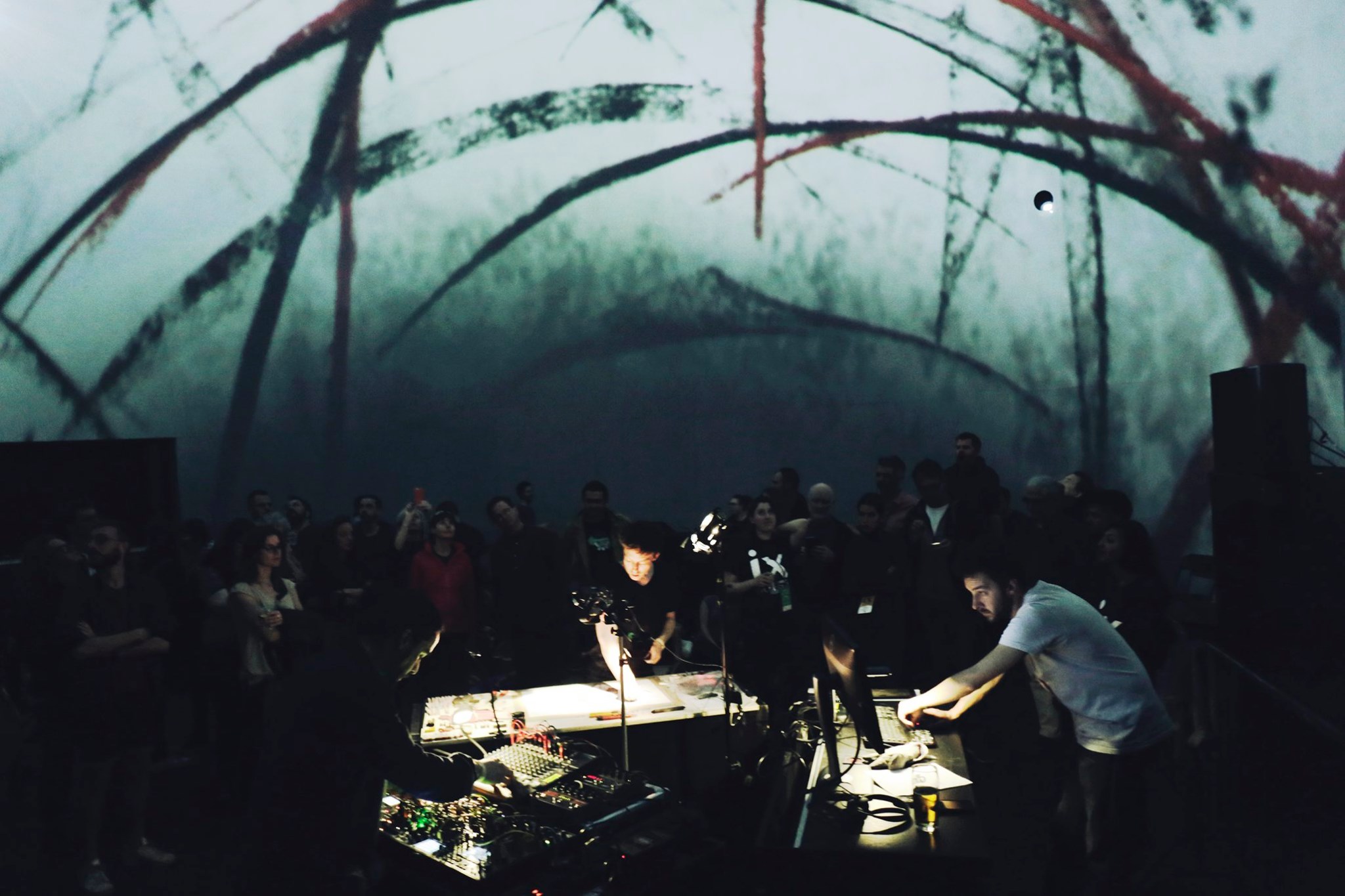
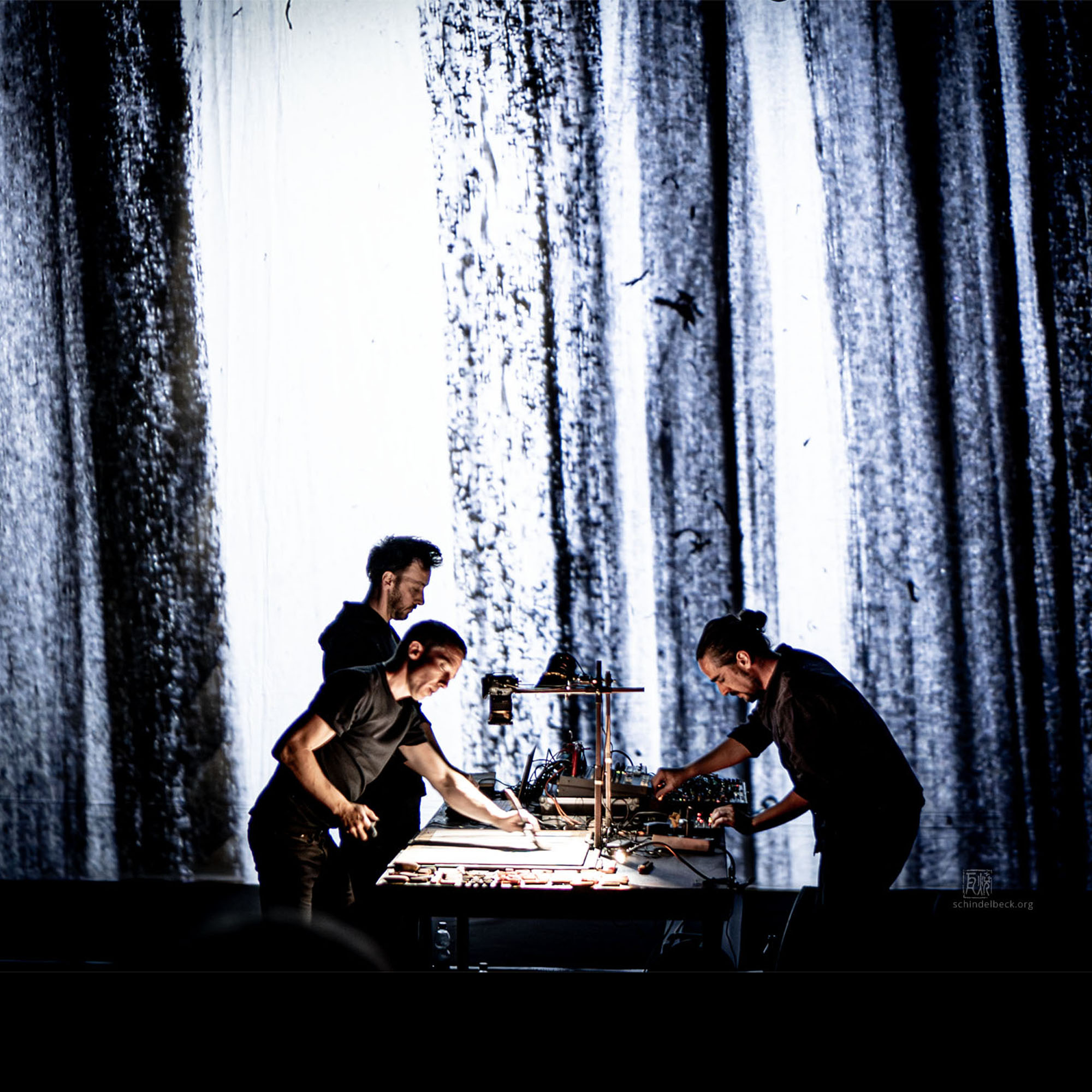
Boris Wilmot: Yes. We usually start with François. He is playing the music while Pierre is drawing and taking pictures as his drawing develops. Those pictures are then sent to my computer, where I sequence and loop them to create short animations that I project onto the screen. That’s the basic idea.

There’s always a slight delay between what Pierre is drawing and what I can show, because I can only work with images he has already created. So Pierre always needs to be one step ahead of the rest of the show. That’s also one of the reasons why we need a certain structure.

Once I have the images, I can manipulate the loops in real time. I can make them shorter or longer, change the frame rate, make them faster or slower, and so on. Meanwhile, Pierre keeps drawing and taking new pictures, which are continuously added to a kind of buffer. At certain points, I can update the loop with these new images.

That was one of the first ideas we had when developing the technical setup, and it turned out to be really useful because it allows the visuals to react very quickly to changes in the music. With traditional live drawing, the drawing develops continuously, so it’s difficult to make an immediate visual change when the music suddenly changes.

With our setup, for example, Pierre might start with black-and-white drawings, which I loop and manipulate during one track. While I’m using those, he can already be working on a new set of drawings in red. Then, when François moves to the next track, I can press one button and, bam, the whole visual world suddenly turns red. So it allows the images and animations to follow the changes in the music much more closely.

-And what is the program used for the manipulation of these pictures?

Boris Wilmot: I’m using VVVV, which is a node-based programming environment. So basically, I use VVVV to write my own software and make it do exactly what I need.

-And I assume it also receives MIDI clock signal coming from the modular system, right?

Boris Wilmot: Yeah, MIDI clock, and sometimes some other MIDI information when we need it. For example, for sequencing the fixed images. Sometimes we’re also basically sending MIDI notes to trigger the visuals that should appear.

-Pierre, you have two pedals on the ground. What exactly are you doing with those? One of them is probably used to take the picture, right?

Pierre Coubeau: No, they both take pictures. The difference between the pedals is that they send the images to different buffers. So if I press pedal A, the image goes to buffer A, and pedal B sends it to buffer B. That allows Boris to work with the different sets of images according to the MIDI signals François sends him.

-Okay, so you’re kind of sorting them into different folders?

Pierre Coubeau: Yes, that’s right.

-And when you build a piece for Alea(s), what comes first - the musical idea or the visual idea? Do you start with the sound and build the visuals around it, or how does that process work?

François Gaspard: We ended up thinking about all the different parts of the live show more as audiovisual objects. When we think, “Okay, what could we add to the live show? Let’s write a new part,” we try to imagine the sound and the image at the same time. For example, we might start with a general idea of something going “taka taka taka taka taka.” From the beginning, we’re thinking about how both the sound and the images can follow that idea. We need to know that it will fit both the musical and visual identity of the project.

Then we work separately on the two sides - the audio part and the visual or graphic part - using that basic idea as a common goal. After that, we put everything together, and we have a new part of the show. That’s usually how we do it now.

-If you had to archive one performance to represent Alea(s) ten years from now, which one would you choose? Maybe there was a particular venue, or just one show where everything came together really well.

Pierre Coubeau: Oh, Switzerland!

François Gaspard: Switzerland, yeah. That’s my favorite too, I think.

Boris Wilmot: Yes, that was Mapping Festival in Geneva.

Pierre Coubeau: It was the perfect place, the perfect size of the room, the perfect crowd and the perfect screen. It just fit the project perfectly. Everything came together under kind of perfect conditions. I don’t know what you guys think, but for me, that was it.

François Gaspard: It’s pretty hard to say, though, because of the way we experience the live show ourselves. For example, I see almost none of the visuals. Maybe three times during the show I have an opportunity to look at the screen, and I think it’s the same for Pierre. He knows what material he’s giving to Boris, but he doesn’t really have time to look at the screen and see what’s happening there. So when you ask which live show we would archive, it’s actually pretty complicated for us to say.

Boris Wilmot: And it also depends. Sometimes you play with a small screen, but you’re in a really cool venue with a good crowd, like when we played in Riga. I mean, the technical setup was pretty bad, but the crowd was completely crazy, so that was a really good feeling.

On the other hand, we’ve played gigs where the technical setup was amazing. We played in a dome in Poland with a 360-degree screen all around the room. Yeah, but the crowd was sitting, so, you know, the mood wasn’t really a party atmosphere. So it depends. But I would definitely say Mapping Festival is in the top three of the best gigs we’ve had.

Pierre Coubeau: And, of course, the one at Erica Synths Garage!
-Continuing about the audience: what do you want people to feel when they come to your show and when they leave? What do you want them to get from the performance?

Boris Wilmot: So there are two things. First, we want the audience to feel like they’re around the table with us and can see that we’re really creating everything right there in front of their eyes. We like this tension of knowing that anything can happen, anything can suddenly pop up. That creates a certain atmosphere.

And then there’s the show itself. It’s really intense. It keeps going up and up and up. The idea is to grab the audience. We start quite low, so they’re asking themselves, “What’s going on?” And then we never let go. We just keep building and building until we reach a point that is almost unbearable.

The sound gets very loud and very violent, the images are blinking and moving very fast, and we go just a little bit beyond the limit. And then we cut. That’s the idea - to have this constant ramping up of intensity.

Pierre Coubeau: For me, Boris explained the aesthetic side of what we’re trying to achieve, but there’s also another aspect. What we’re doing is pretty challenging because of the different mediums we’re working with. There’s a lot of information that we’re giving to the audience at the same time - music, rhythm, visuals, what’s happening on the table - and it’s actually quite difficult to manage all of that information.

So we also have to accept that we don’t control everything. That allows the crowd to have its own experience and its own energy. People pick up whatever they want from the performance. Some people focus more on François’s music, some more on the visuals, and others on what’s happening on the table.

That’s why it’s very important for us to play within the audience. It gives people more freedom to engage with all these different elements. If we’re up on a stage, everything becomes fixed. It communicates something that feels too rigid, too blocked. But, yeah, there’s also this aesthetic of pure energy, like Boris said. That’s pretty much it.

Boris Wilmot: And within that energy, like Pierre just said, everyone can take what they want from it. I mean, my seven-year-old has already seen the show, and he was just looking at the drawings. And then sometimes you have people who just close their eyes and dance. They don’t look at anything we’re doing - they just listen to the music. So those are kind of the two extremes.

And, yeah, I think that’s one of the reasons people like the show. They can take whatever they want from it.

François Gaspard: Yeah, you can have a very intellectual relationship with the show by looking closely at the drawings, seeing what’s happening on the screen and noticing the delay between Pierre’s work and what eventually appears there. But you can also experience it in a very emotional way. Like Boris said, some people don’t even look at the screen - they’re just completely into the music.

-When people say “Brussels underground,” what’s the first image that comes to your mind - and what’s the thing nobody would guess is part of it?

François Gaspard: I think there are many different places and many different scenes in Brussels. You have underground culture in clubs as well as squats and even free parties. It’s very diverse. Brussels in general is very diverse, and that’s also true of the music scene. There are a lot of different things happening, and they’re also cross-breeding more and more right now - different musical genres mixing together, as well as music crossing over with visual and audiovisual work. Maybe Boris can answer this better than me, but it’s a very active scene at the moment, especially when it comes to audiovisual work.

-Is there a band or artist from Brussels you’d like to highlight? Someone you’ve discovered recently or a project you think people should know about?

François Gaspard: Maybe one example, because I was talking about this cross-breeding and mixing of genres, which I think Brussels does really well. I would say Echt!, for example. They’re people around us making music, and I think they’re a good example of that. In Brussels language, it means “real.” And it’s not Flemish, it’s not French - it’s like a Brussels language. They mix jazz and electronic music, which itself is not something completely new. We’ve had projects doing that for maybe 15 years, but they really nailed the way they do it.

Basically, they’re jazz-trained musicians playing electronic music, but they really understand what electronic music is. For me, it’s one of the projects in Brussels right now that I would definitely give a shout-out to.

-And what about Riga? How did you enjoy your time here? Did you have a chance to experience any of the local music scene or see something while you were here?

Pierre Coubeau: The party - the night we played - was great because we were there in a really, really good mood, but other than that we didn’t really have time to do much else!

You may also like

Mixhell_249.jpg
July 10, 2020 · INTERVIEWS

MIXHELL

Martin-Gore-Col-1-Travis-Shinn.jpg
July 22, 2020 · INTERVIEWS

Martin Gore

HH.jpg
Aug. 18, 2020 · INTERVIEWS

Headless Horseman