Featured

Chamber of Circuits

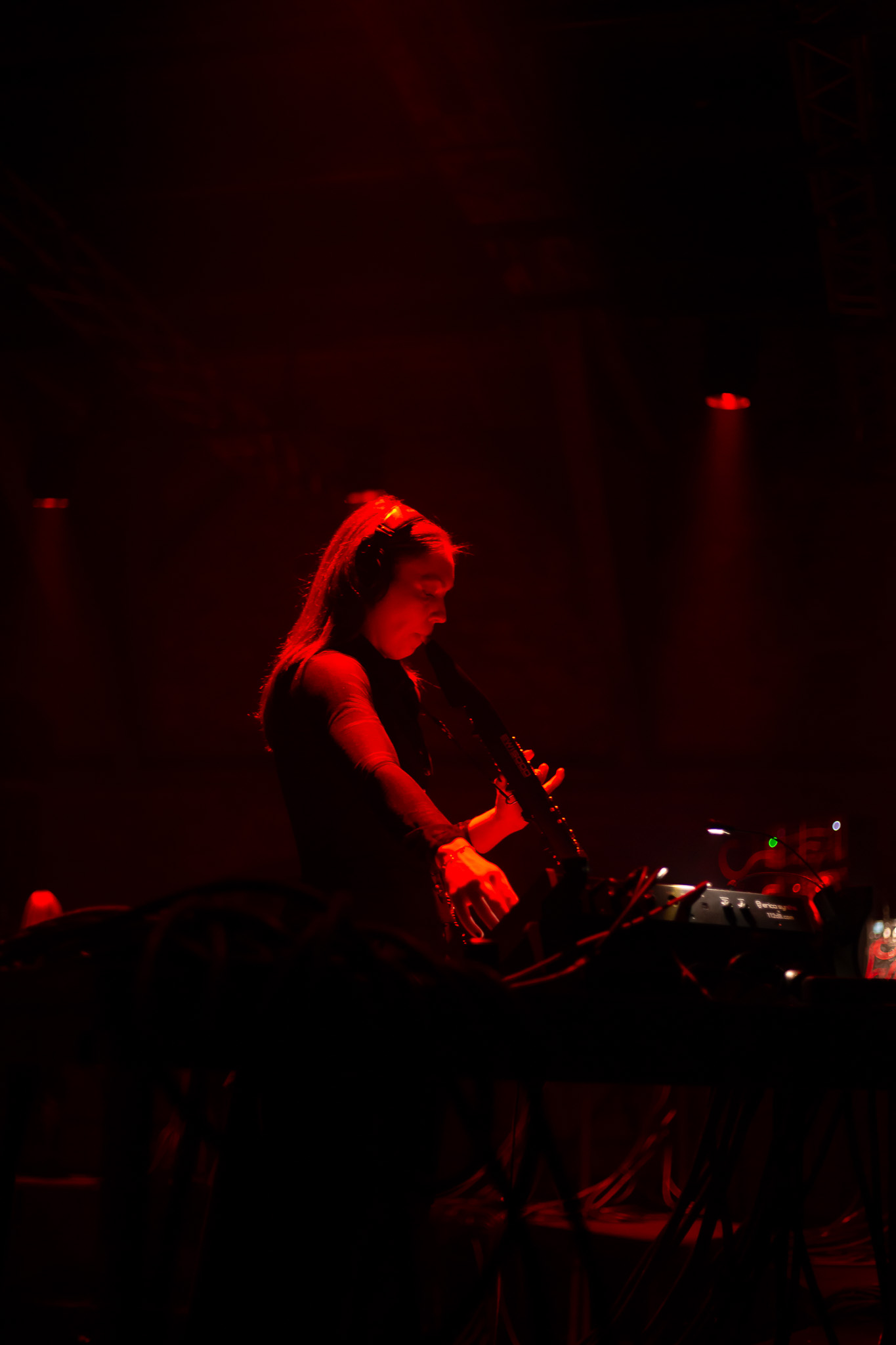
We sat down with composer Anna Fišere to talk about her year-long residency at the Erica Synths Garage and the creation of Noesis - an ambitious new work for eight performers and seventeen electronic music instruments that brought together musicians from Latvia's classical and electronic music scenes. We discussed her creative process, learning synthesis from scratch, ancient Greek philosophy, science fiction, and what it means to write for a synthesizer chamber orchestra.

-How did your journey into music begin?

It started in childhood because my grandmother was a singer and a piano teacher. I was surrounded by music from the age of three, playing piano and singing. Honestly, I only remember myself in connection with music.

Later on, I was inspired by NSRD (Nebijušu Sajūtu Restaurācijas Darbnīca) and Hardijs Lediņš, and that's when my interest in electronic music began. There was also an ensemble called First Latvians on Mars, where we performed works related to NSRD. That experience really shaped my interest in electronic and experimental music.
-How did the idea of writing for a synthesizer chamber orchestra come about?

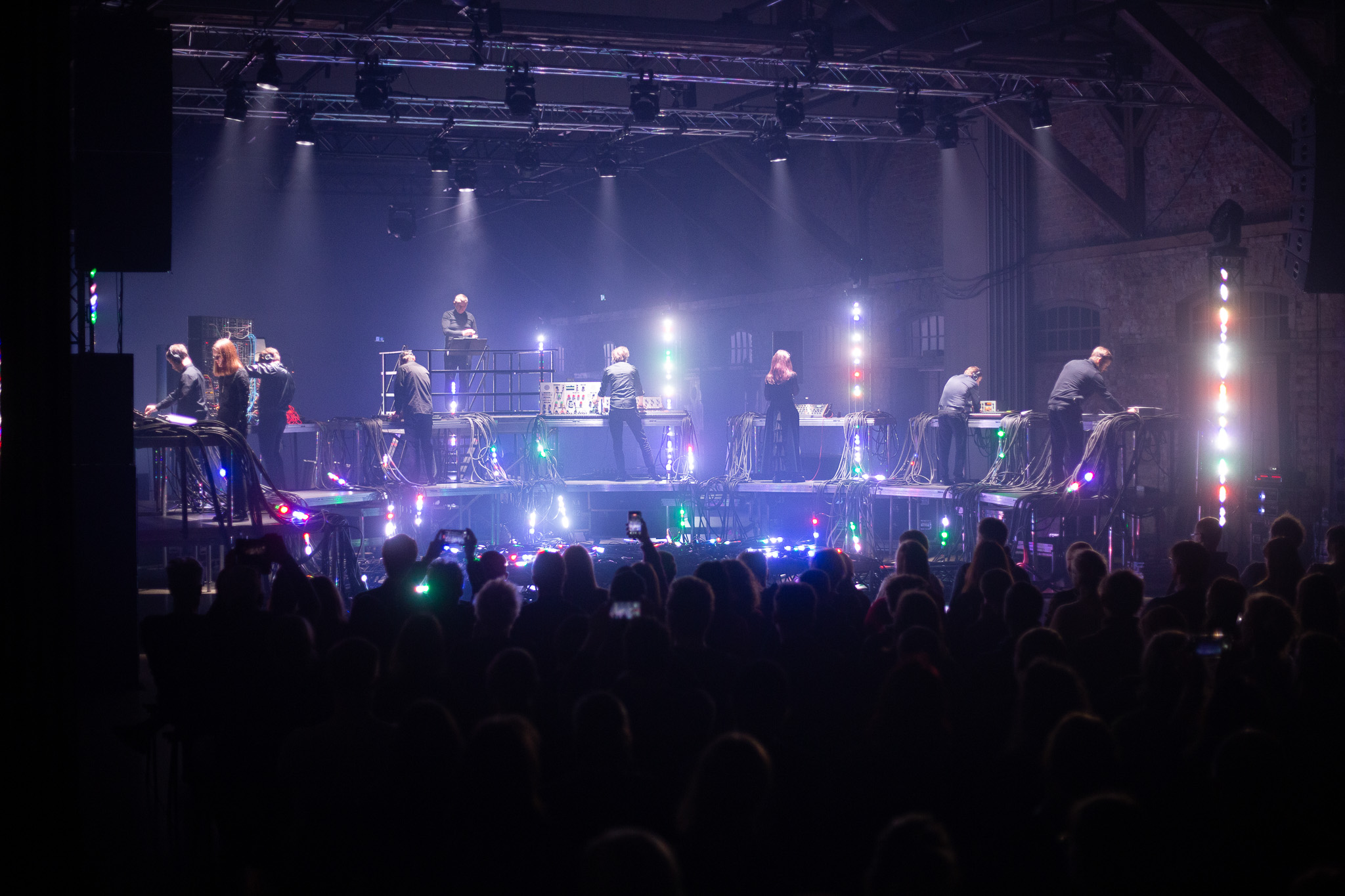
Erica Synths approached me with the idea of composing a piece for a synthesizer chamber orchestra. We agreed on the number of performers, because the number eight has always been important to me - for me, it represents infinity. That's why there are eight performers.

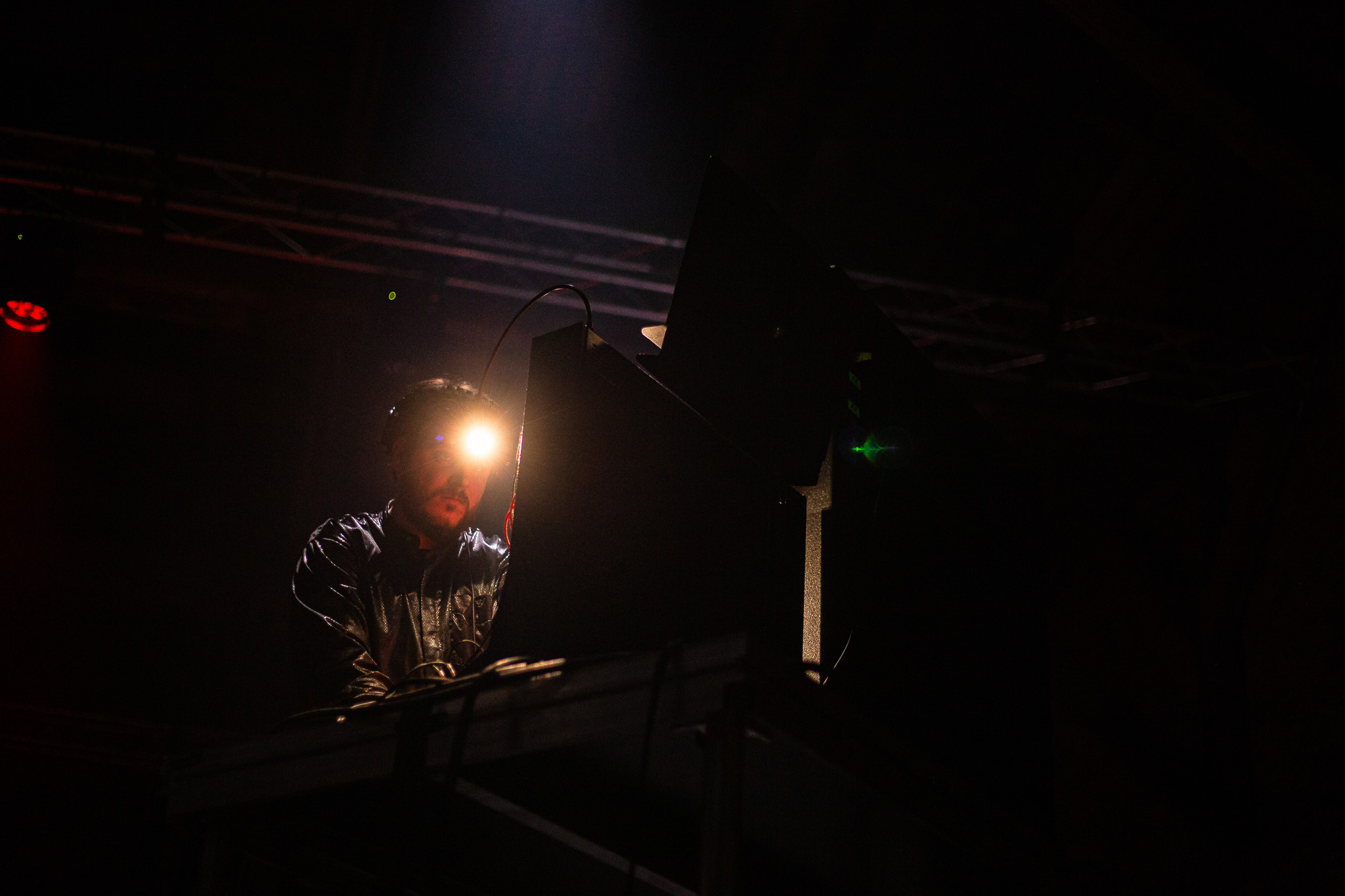
At one point I asked Ģirts, "Maybe we should make it smaller?" He immediately said, "No, absolutely not." It didn't take much convincing - I agreed right away. Only afterwards did I fully realize just how technically challenging it would be.

-You started working on this piece more than a year before its premiere, and at that point you had only minimal experience with synthesizer technology. What was your strategy for learning?

That strategy changed over time. At first, I wanted to understand the physical properties of sound and learn every synthesizer that would be used in the piece. But that simply took too much time. Eventually I realized that, as a composer, it was much more interesting to approach synthesizers intuitively and learn them through creativity. Sometimes that was incredibly challenging because if I had a very specific sound in mind, I could easily spend seven hours creating just five seconds of audio.

-What drew you to the concept of Noesis, and why was it important as the central idea of the piece?

There were several reasons. I've been interested in ancient Greek philosophy for years. In Plato's philosophy, noesis means "pure knowledge" or "direct perception." It reminds me of Plato's Allegory of the Cave, where people perceive only shadows instead of the direct light of the sun. I think it's a beautiful metaphor for illusion and for the way people try to navigate the world.

The second influence was science fiction. Synthesizers naturally make me think of sci-fi, so I chose a text from the film The Creation of the Humanoids. The piece opens with a short excerpt from the film, used almost like a cliché. It appears only in the introduction and is deliberately not repeated later in the work.

What interested me was the fact that we're living in a technological age. Now, with AI, everything is becoming even more technology-driven. I see certain risks in that, and I think it's important to think about them and talk about them. It's obvious that the world five years from now won't resemble the one we're living in today.

-Were there any composers who inspired this work?

Yes, I was inspired by the French spectral composer Gérard Grisey and spectral music’s focus on the inner qualities of sound. In Noesis, spectral principles shape the harmonies, timbres, and transformations, allowing musical structures to grow from the natural properties of sound itself, but from the electronic music world - Bad Sector, Circular and Jean Michel Jarre.

-Are there any artistic elements you've been using since the beginning of your career that music historians might identify a hundred years from now as unmistakably Anna Fišere?

Probably different kinds of natural sounds and the voices of various creatures. I've heard that observation many times, and Noesis also features different kinds of creatures. There's definitely an element of mysticism as well. Another thing people often associate with my work is a kind of consciousness-altering atmosphere.

And, of course, there's the influence of spectralism - the use of microtones and overtones. That was very important here too. It was fascinating because, unlike traditional instruments, synthesizers allow you to achieve microtonal intervals with absolute precision. With a violin or a flute, the level of precision is different. (Izdzēsu “completely”).

-Do you have an artistic mission?

If I can call it a mission, it would be to create musical spaces where different realities, sensations, and forms of perception can emerge. Whether those worlds are real, exist in other dimensions, or simply represent possibilities beyond everyday reality - that's up to each listener to decide.

The other mission would simply be to inspire.

-What does a composer feel during a premiere? Is that finally the moment when you get to sit back and relax?

No! I struggle to let go of control until the very last moment. Even though the piece is finished and there's nothing left to change, it's very difficult to distance yourself from it and listen as an audience member. During the premiere, I still feel like I'm inside the process, so it's almost impossible to evaluate the work objectively.

-Now that the premiere has passed, has there been any feedback that has stayed with you?

Yes. This piece received a lot of compliments. One comment I particularly liked came from the musicologist Boriss Avramecs. He wrote:

"Powerful. A dense concentration of meaning, fascinating sonorities, and absolutely convincing."

Several people also told me they felt as though they had been guided through some kind of purification process. It's very important to me that every piece is not just an auditory experience, but also something deeply connected with visuality.

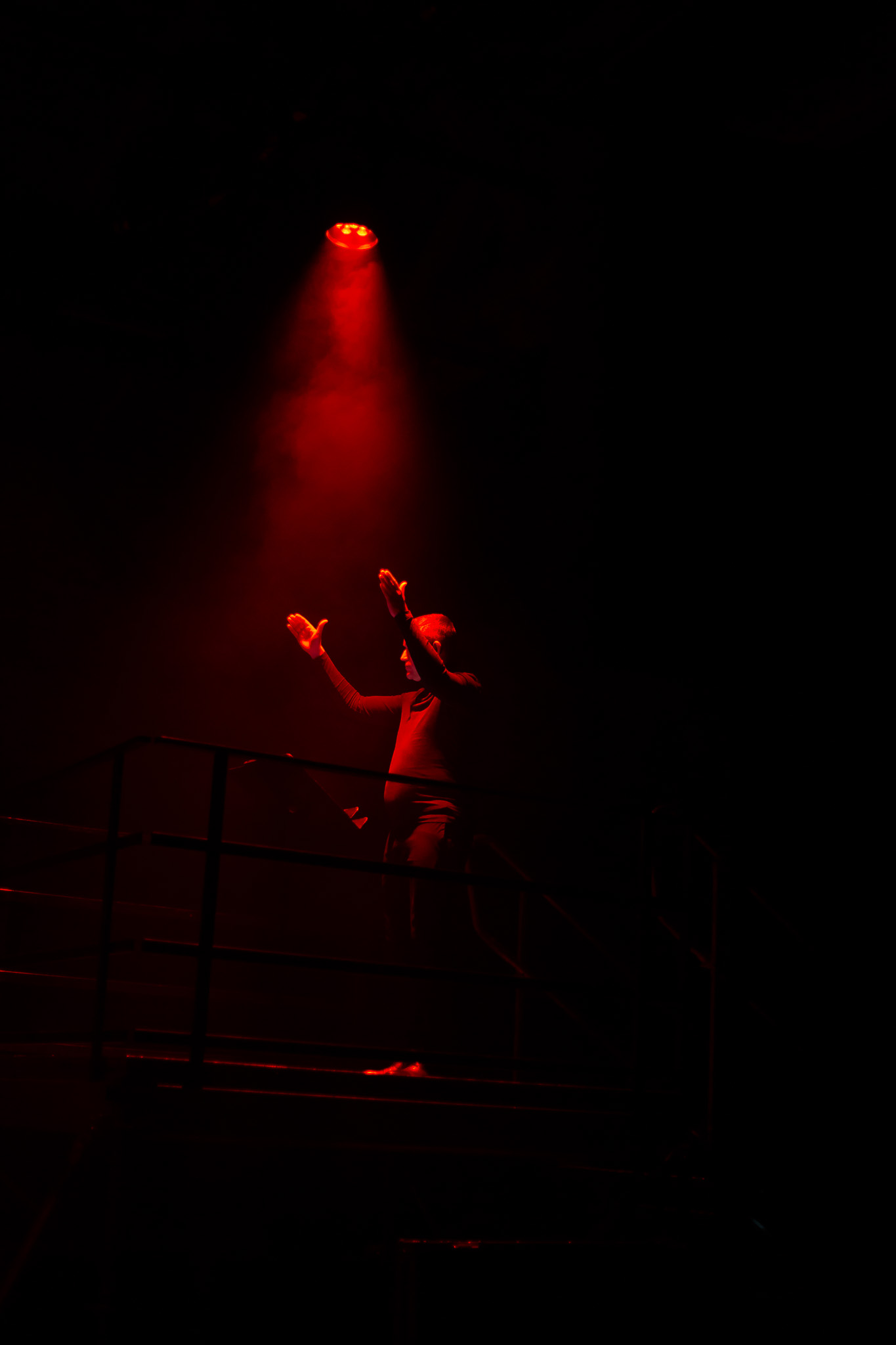
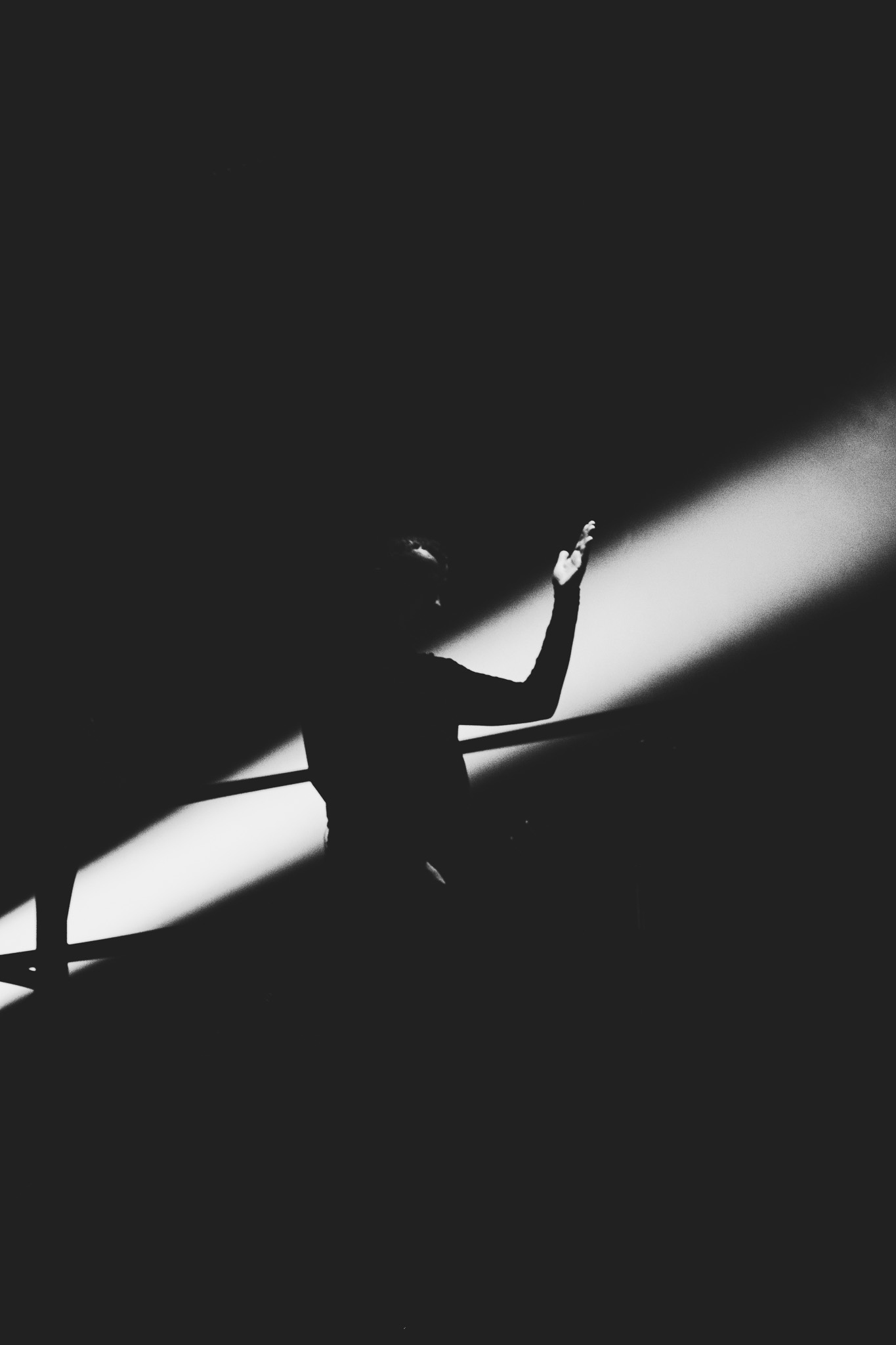
The visual side of the piece was created in collaboration with the artist Artūrs Virtmanis. His scenography became a part of the music itself, working together with the sound as one organism. It supported the idea of the control room and gently showed the natural qualities of the synthesizers. As part of this concept, it was important that the conductor stood elevated on a podium, almost like a god-like figure. I’m really happy that audiences perceived it that way.

I was also grateful to see that all the enormous work paid off. Many people came up to me after the concert. Later I received several letters as well, and some people have already asked for a second part.

-What are you working on now?

Right now I'm writing an opera - a large-scale work about one hour and twenty minutes long - for synthesizers, classical instruments and multiple choirs. Working on Noesis has inspired me tremendously. The opera will be staged at the Latvian National Opera, and several performers from Noesis will also take part.

You may also like

Mixhell_249.jpg
July 10, 2020 · INTERVIEWS

MIXHELL

Martin-Gore-Col-1-Travis-Shinn.jpg
July 22, 2020 · INTERVIEWS

Martin Gore

HH.jpg
Aug. 18, 2020 · INTERVIEWS

Headless Horseman