Featured

Paradox As The Highest Form Of Humor

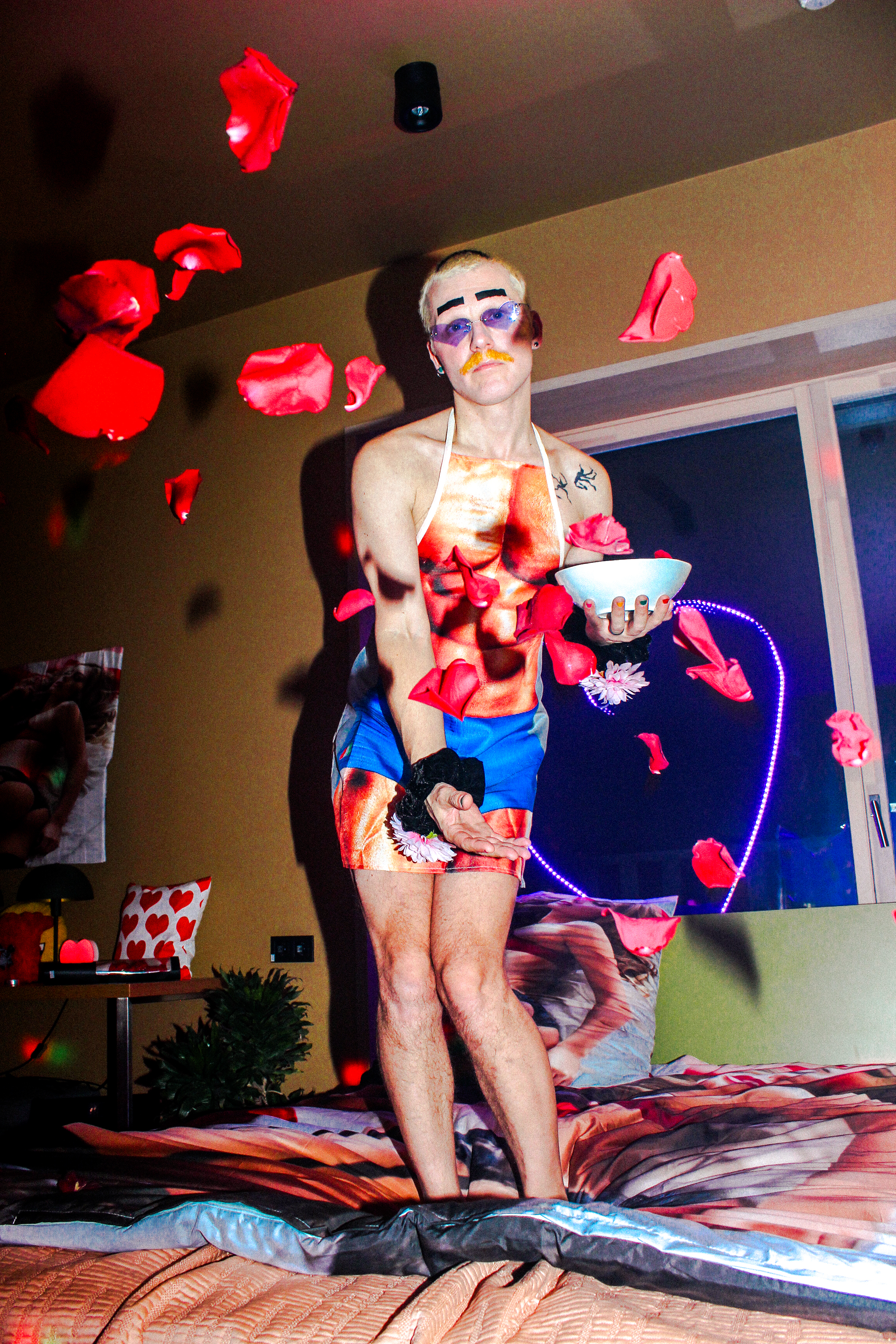
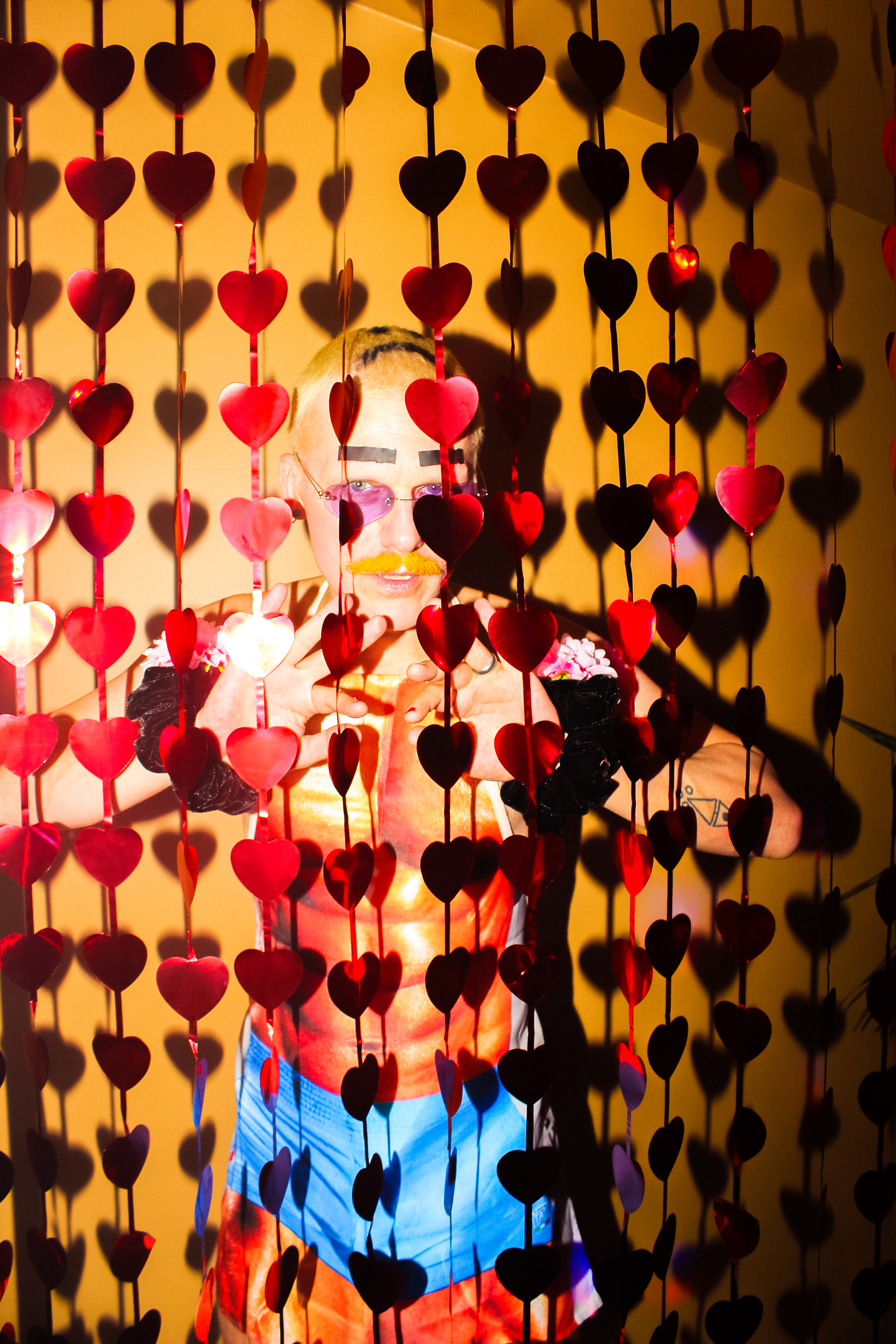
When the Punktò team arrived for their residency at the Erica Synths Garage, we weren’t entirely sure what to expect - and, most likely, neither were they. Within days, our familiar office spaces had transformed beyond recognition. The performance hall was filled with stuffed animals and unidentifiable props (the only audience they had while the camera was running). The bedroom morphed into what could only be described as a love temple, and the entire building began to feel like an abandoned amusement park running on fever dreams and a smoke machine. They worked through the nights creating absurd theatre.

Punktò is not one person but a an ecosystem of ideas - Jonas Šarkus, the devil steering this organism; Ignas Juzokas, the musical mastermind behind the curtains; Paulius Varonenka, the genius force behind the lights and set design; Benas Šarka, god of tongue who also happens to know how to hold a camera; and Urtė Savickaitė, the producer who somehow kept this wild crew together (and even ended up washing the big trash bin they insisted on bringing in our kitchen).

Katrīna sat down with Jonas and Ignas to talk about clichés, noise, and the beautiful absurdity.


-What brought you two together, and why did Punktò need to be born?

JŠ: The first time I saw Ignas was at the Lithuanian Academy of Music and Theatre. I remember it very clearly- like a movie scene. He was walking down the corridor from far away, carrying this huge double bass. He has this funny way of walking, and I thought, who is this guy?

Years later, we ended up on the same stage for the first time - me acting, him playing - and it felt like something came full circle. That was almost twenty years ago.

Eventually, our paths crossed again, and that grew into Punktò. Working with him feels natural - maybe cliché to say, but we understand each other without words. I start something, and he’s already there. We read from the same page.

IJ: Yes - when you’re on the same page, you’re reading the same book.

We’ve both worked in theatre for a long time, so we understand emotion through sound, gesture, rhythm. I think that’s why it’s easy for us to connect, we can read each other’s emotions quite well.

Sometimes maybe too well. Jonas can be intense, he pushes hard. But I know where the limits are, and I know how to deal with it.

-You bring Jonas down to the ground?

IJ: Maybe - but I won’t tell you when. If it happens, you won’t see it coming, and you won’t even notice anything- it’ll seem like nothing happened, and everything’s fine.

Jonas, when you become Punktò, what dissolves in Jonas, what disappears?

JŠ: Punktò helped me realise: why should I pretend to be something else? When we’re kids, we’re real. But as we grow, social life, family, friends - all of that adds layers. We start collecting traumas, putting on masks. We try to look smarter than we are, stronger than we are. I’m not doing anything bad in this world, I haven’t done harm. So why hide behind masks?

If I’m stupid in something - fine! Before, if someone I respected - like a teacher - talked about something I didn’t know, I’d just nod and pretend to understand. I didn’t want to look stupid, and I’d miss the chance to learn.

Now I just say, “Sorry, I don’t know, can you explain?” And that’s how I actually learn.

For me, Punktò is about that - not being afraid to be yourself, to ask, to admit when you don’t know.


Photo by Deimantė Bilaišytė


-Ignas, a technical question that I usually include in our interviews - since our audience are mostly synth nerds - what’s in your setup? What were you using during this residency?

IJ: Most of the material was pre-recorded, so there wasn’t much space for improvisation - a bit, but not too much. The main foundation was Pērkons. That was the battle tank, the base of the rhythm. It can do even those strange, awkward sounds- really flexible.

We also used the MS-20 and ARP 2600. Those three were the main ones. There was a Prophet 08 as well, but the core was those.

JŠ: And one of the instruments was the voice. We recorded a lot of things - turning them into percussive sounds. We made drums from balls, from water splashing, even from peeing into the toilet - to make sound.

IJ: With enough layers, even that can sound good.

JŠ: The body is an instrument too! Do you remember how the idea about this residency started? When we first visited the office, I had taken a piece of tape - or maybe scissors - from one of the tables and I just started making noise. I remember I was asking, “Is this hi-hat? Hat of Erica Synths?” And then came the idea - “Let’s do something at Erica Synths that’s not about synths.”


-Jonas, do your children ever inspire your work?

JŠ: Yes - maybe not directly, but they remind me of curiosity. When we become adults, we start losing it. As kids, we’re naturally curious, we want to understand everything. But when we grow up, we build walls - family, society, trauma. I think that’s also what’s happening with the younger generation now. They see so much online, they think, “I understand, I can do this too.” Everything feels close and easy. And that’s good - it gives confidence, helps you know your worth.

IJ: Your worth, not your price.

JŠ: Right. But that confidence also kills curiosity. People stop learning. They stop trusting others - there are no authorities anymore. And when you only believe yourself, life will eventually hit you hard. Sometimes you need someone to remind you that you still have a lot to learn. Be brave, be strong, but stay calm.

I remember being like that too - first doing, then thinking.

IJ: I think every generation goes through that. Every teenager believes they know best. Social media just makes it louder, it tells you everything’s easy. But when you actually try, it’s not. You need to fall a few times to understand.

JŠ: Kids still have that curiosity. They learn constantly, without fear. Adults forget how to do that. And I hate when people dismiss young ones, saying, “You’re too young, you don’t know anything.” That’s stupid. A 15-year-old can have experiences that teach you something new. If you stay curious and open, you can always learn from anyone.

-Where does this alternative universe come from- did you find it in a mikrorayon, in theatre, or in boredom?

JŠ: I can’t say I’m an expert in all the rules of theatre, stage or music, but by now both of us know them well enough - how things should be done, what works, what doesn’t. And the main idea behind Punktò is to break those rules. If something feels “right” on stage, then it’s too right - we have to make it wrong, make it uncomfortable.

In theatre, for example, a pause is considered a strong moment. Normally, when it lasts too long, you’d want to move on. But I like to extend it even more! Make people bored. Because the longer it goes, the stronger is the kick when you break that boredom. There’s a lot of paradox in that process.

IJ: Yes, exactly. All those rules are already encoded into the performance from the very beginning. That’s why breaking them works. The audience understands that we’re not doing “just another performance.” There’s a punk energy in it, a bit of that anarchic aesthetic. It’s about paradox - social, musical, visual. And paradox, for me, is the highest form of humor. Punktò lives in that space of paradox.

Paradox, for me, is the highest form of humor. Punktò lives in that space of paradox.

JŠ: And what I don’t like is straight things - didactic art - art that tells you how things should be. We don’t know how things should be. Art should ask questions, not give answers. It can provoke, ask whether it is okay or not? When art becomes didactic, it becomes boring. It puts the artist above the audience, saying “I know better and I will tell you how everything has to be.”

I’m not a big fan of art that’s only entertaining. For me, art is about emotion. In Vilnius, there’s this big pipe installation coming out of the ground into the river - people argue about whether it’s ugly or art, about how much it cost. And that’s exactly what makes it interesting: it provokes emotion, discussion, curiosity. That’s what art should do - raise questions, move people, help them grow a bit.

Art shouldn’t make people feel “full.” My mission is kind of the opposite - to take that fullness apart, to leave space for doubt.

IJ: Exactly, it’s paradox again. Some art becomes decoration - like paintings of flowers on the street. It can be nice, aesthetic, but it doesn’t make you ask “why?” It doesn’t provoke. And that’s the difference - our work tries to provoke, to question.

JŠ: Yes - but even with kitsch, who decides what’s bad taste? For one person, it’s ugly; for another, it’s beautiful. If you take those flower wallpapers and place them in a different context, they suddenly mean something else. Punktò is full of that - social analysis, playing with social clichés.


Photo by Deimantė Bilaišytė


-So, are your performances like a mirror to your listeners?

IJ: I think of this performance as questioning a lot of geeks - synth nerds. Why are you doing what you’re doing? Are you buying gear just to have it, or are you actually creating something with it? I’ve asked these questions myself, because I was collecting gear too.

JŠ: Yeah, we had a discussion about that. Ignas is making unbelievable techno, but he’s not releasing anything. He says he just enjoys creating - and that’s it. I said that we, as artists, don’t know how we got this gift, but an artist’s gift is to create and share. Not to just sit in the studio.

IJ: There are so many people who have a lot of gear and don’t even use it. Sometimes I just want to say - take the simplest thing you have, one synth, one noise box, whatever, and make the most out of it. Then you’ll understand that you don’t really need anything more.

JŠ: Exactly - you only really need a microphone, your body, and a computer.

IJ: On the other hand, the aesthetics and control of synthesizers are also important - that’s another part of our sound. We don’t use much, but what we use matters. For example, on the “la la la” track we used modular synths. It sounds simple, but the bassline is ultra-complex.

JŠ: People listen to that song and think it’s clean pop, but the background - everything behind it - was made by distorting and breaking analog sounds until it worked. And that’s the paradox: people are happy about trash. They don’t even realize what’s underneath.

IJ: And it shows that it’s not about what you use. I gave most of my gear to the university where I teach. The students are happy, and so am I.


-If an alien visits in ten years, sees your work, and asks, “Why did you make this back then?”, what do you say?

JŠ: I’d probably ask him - “What’s your schedule for the next year? Can we film something? Can you play in my video?

IJ: I’d say: because we’re human. Art is the only thing that truly belongs to humans. No other creature creates art just for the sake of it. Sure, fish make patterns in sand, birds dance in spring - but only humans understand it as art.

So we create because we’re human. That’s the answer.


You may also like

Mixhell_249.jpg
July 10, 2020 · INTERVIEWS

MIXHELL

Martin-Gore-Col-1-Travis-Shinn.jpg
July 22, 2020 · INTERVIEWS

Martin Gore

HH.jpg
Aug. 18, 2020 · INTERVIEWS

Headless Horseman